









Your page might be the source behind that answer without the person clicking through to visit it at all.
A Quick Note On the Acronym; GEO
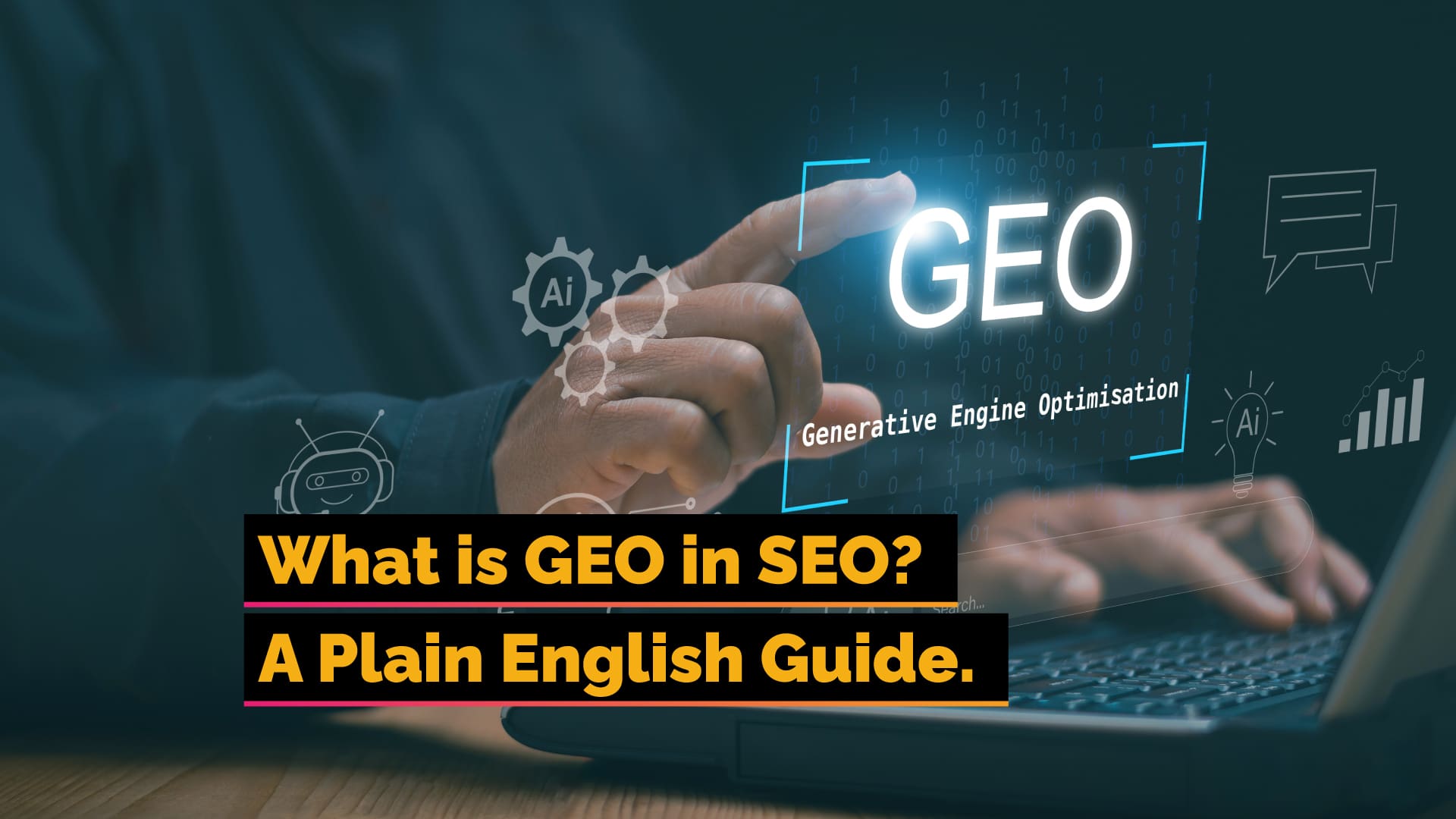
Worth flagging early: if you search “what is GEO” on its own, you’ll get a mix of results, some about generative engine optimisation, plenty about geography, geolocation and geo-targeting. The acronym gets blended a lot, so if you’re researching this yourself, searching “what is GEO in SEO” or “generative engine optimisation” will get you cleaner results.

How GEO is Different from SEO
Traditional SEO is built around getting your page to rank in organic search (the list of blue links you see when you would used to use Google (ah, the good ol’ days)). Someone searches, sees ten results, and clicks the one that looks most relevant.
Generative engines work differently. Instead of returning a list, they generate a direct answer, often pulling from several sources at once, and present that answer to the person before they ever see a list of websites. Your page might be the source behind that answer without the person clicking through to visit it at all.
That changes what “success” looks like. With SEO, a click is the goal. With GEO, being cited or referenced inside the generated answer is often the goal, even if it doesn’t come with a visit to your site.

What GEO Actually Involves in Practice
There’s no single toggle you switch on for this. In practice, it tends to come down to a handful of things:
- Clear, direct answers: Generative engines favour content that answers a question plainly, early, without making the reader dig for it.
- Structured data: Schema markup helps AI tools (and search engines generally) understand what your content actually is, not just what it says.
- Demonstrated expertise: Content written by someone with genuine experience in the subject, rather than generic filler, is more likely to be treated as a trustworthy source.
- Consistent, accurate information across your site: If your site contradicts itself in different places, that undermines the credibility signals AI tools are looking for.
- Being citable, not just readable: Specific facts, figures and clearly stated positions are easier for an AI tool to lift and attribute than vague, generalised prose.
None of this is especially unique. It’s largely the same discipline that’s always underpinned good SEO and good content, applied with a slightly different end goal in mind.
Do You Need to Choose Between SEO and GEO?
Where This Fits into a Wider Strategy
We treat GEO as one part of a broader approach rather than a separate service bolted on.
The same principles that help a page rank well also help it get cited by AI tools. If you’re already investing in solid SEO fundamentals, you’re closer to being GEO-ready than you might think.